

COP30 in Belém: the COP of forests (and Indigenous peoples), but not yet the COP of food
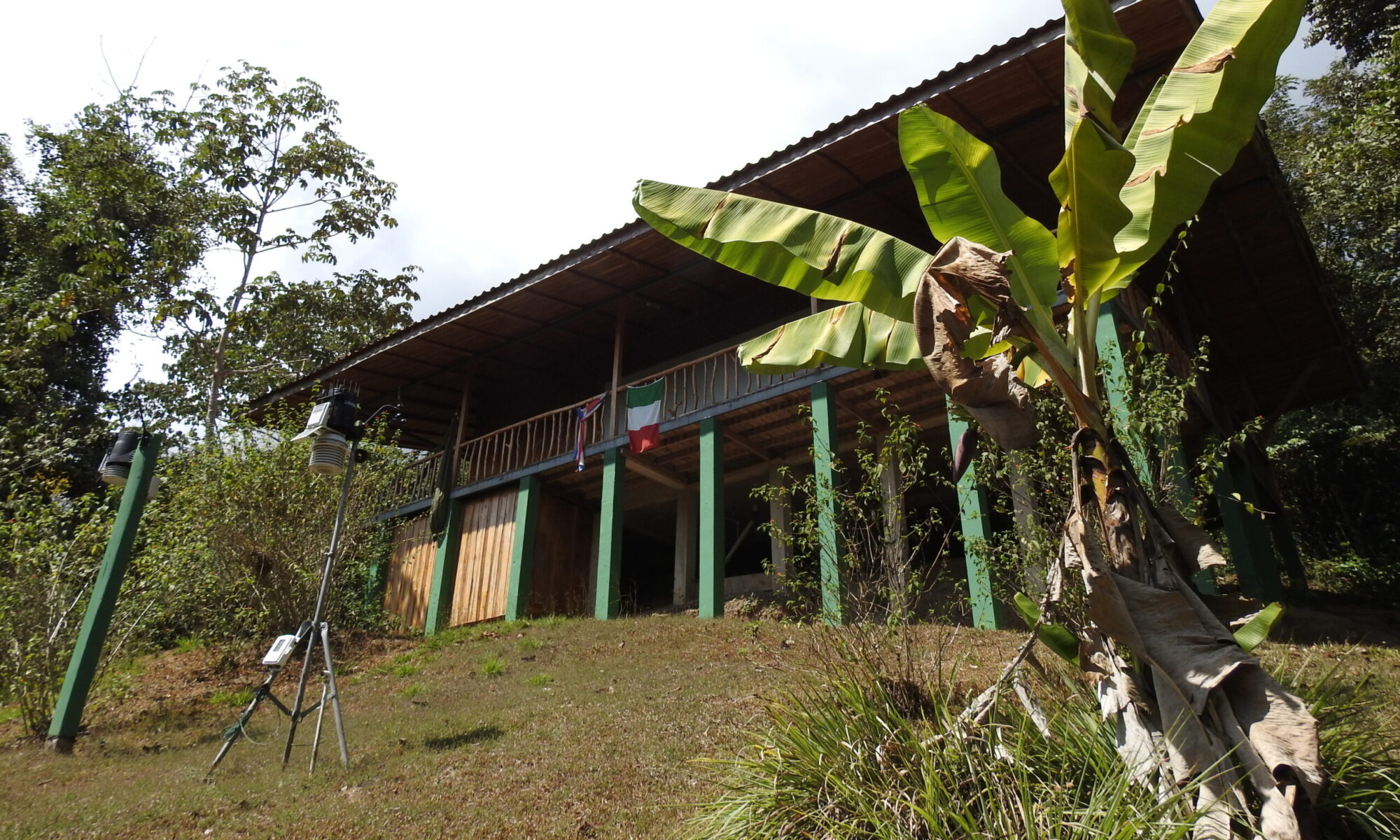
A perspective from the Italy–Costa Rica Biological and Meteoclimatic Station
COP30 in Belém will be remembered as a conference deeply shaped by tropical forests and Indigenous peoples. Much less, unfortunately, as the COP that truly placed food systems and agriculture at the centre — even though they are among the main drivers of both climate change and biodiversity loss.
The “global mutirão”: many good intentions, few clear pathways
The final political package is called “global mutirão”, a Portuguese term describing collective community work. The text calls for tripling adaptation finance by 2035, highlights the need to protect nature, biodiversity, and Indigenous rights, and mentions the goal of halting deforestation by 2030.
But two key elements are missing:
- no official roadmap to phase out fossil fuels;
- no operational roadmap to effectively end deforestation.
And symbolically, the word “food” never appears in the entire mutirão text. Food systems remain outside the core of the agreement.
Forests in the spotlight: the new tropical fund and other commitments
Brazil came with a major announcement: the Tropical Forest Forever Fund (TFFF), designed to “reward” countries that protect tropical forests. So far it has raised $6.6 billion, aiming for $125 billion with contributions from governments, philanthropy and private investors.
It is the largest forest finance mechanism ever proposed, but criticism abounds:
- risk of further fragmenting climate finance;
- fear that investors may benefit more than forest communities;
- only 20% of funds reserved explicitly for Indigenous peoples.
Alongside the TFFF, COP30 confirmed commitments for the Congo Basin, $1.8 billion for land rights of Indigenous and local communities, and additional resources for forest monitoring and restoration.
For biological and climate-monitoring stations, these announcements matter directly: forest finance increasingly relies on observation networks, climate data, forest inventories and remote sensing. Without robust measurements — from long-term temperature series to soil moisture and drought indices — forest protection remains theoretical.
Indigenous peoples: stronger recognition, but limited access to funds
COP30 saw a record participation of Indigenous representatives: more than 3,000 people. The final text recognises:
- their territorial rights;
- the value of traditional knowledge;
- $1.8 billion for tenure rights by 2030;
- a collective goal of 160 million hectares of Indigenous territories.
These are important steps. Indigenous-managed lands often have lower deforestation rates and higher ecological integrity. But a central issue remains unresolved: direct access to finance is still limited, and many communities are only partially involved in decision-making processes.
Adaptation and agriculture: initial steps, but food remains sidelined
On adaptation, COP30 approved 59 voluntary indicators, including 5 linked to agriculture and food systems. This is a move towards a more integrated understanding of climate, food and resilience — but the indicators are non-binding.
The agriculture negotiation (Sharm el-Sheikh joint work) ended with a postponement to 2026, with no substantial decision on agroecology, agricultural carbon markets, innovation or finance. Many observers called it a missed opportunity.
The missing deforestation roadmap
More than 90 countries supported the idea of a global deforestation roadmap for 2030, but it did not make it into the final text. Brazil pledged to advance the roadmap outside the UNFCCC process, together with a fossil fuel exit roadmap.
Why this matters for an Italy–Costa Rica station
This COP30 matters for our biological and meteoclimatic station for at least three reasons:
- Forests as climate allies
The new funds, despite their limits, recognise tropical forests — from Costa Rica to Amazonia — as key for climate stability, biodiversity and the hydrological cycle. - Long-term observations
Adaptation indicators, forest monitoring and carbon market evaluations require reliable time series of climatic and ecological data. Stations like “Italy–Costa Rica” can serve as important connectors between local observation and global networks. - Dialogue between science and communities
The strengthened Indigenous presence encourages collaboration between scientific research and traditional knowledge. In Costa Rica — a country with a long-standing conservation culture — such stations can be real bridges between researchers, communities and protected area managers.
In summary, Belém was truly the COP of forests and Indigenous peoples, but not yet the COP of food and agricultural systems. For those working daily among tropical forests, measurement tools and climate data, the message is clear: political progress is slow, but the value of on-the-ground observation and research networks has never been more strategic.
For further reading: Carbon Brief, “COP30: Key outcomes for food, forests, land and nature at the UN climate talks in Belém.”
https://www.carbonbrief.org/cop30-key-outcomes-for-food-forests-land-and-nature-at-the-un-climate-talks-in-belem/


