
🇬🇧
🌕 A Lunar Halo over the Costa Rican Night
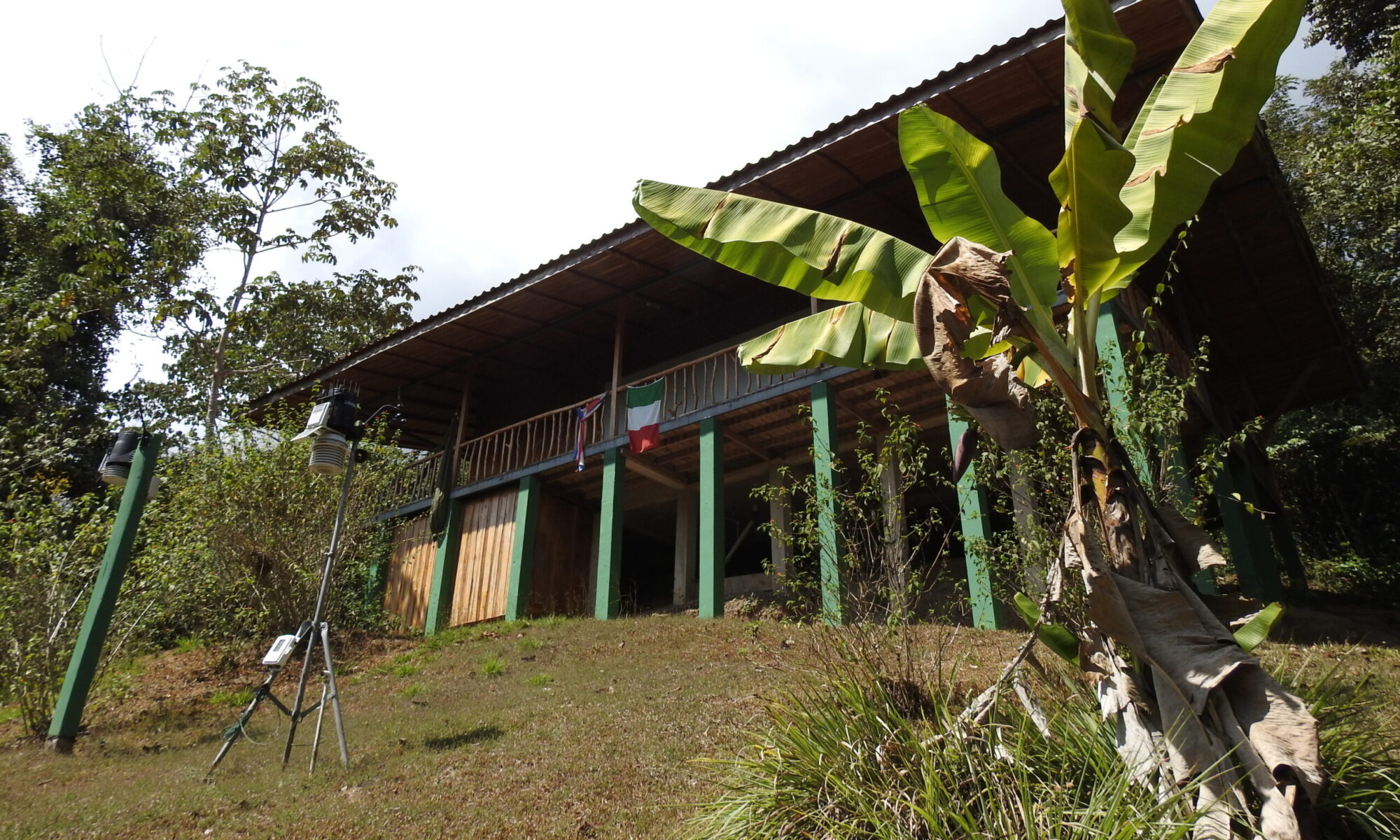
📍 From the webcam of the “Italia Costa Rica” meteoclimatic-biological station – Karen Mogensen Reserve
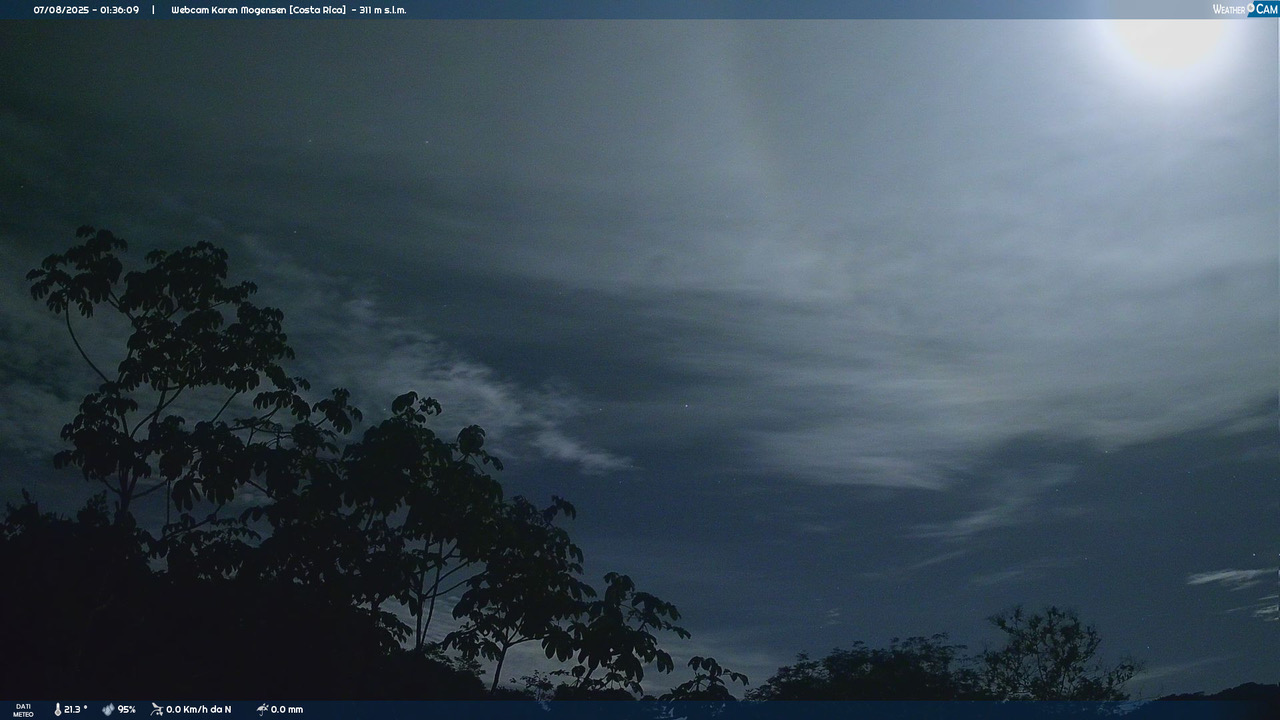
In the early hours of August 7, 2025, the automatic webcam installed at our station in the Karen Mogensen Reserve captured a scene that is both fascinating and rare: a possible lunar halo, visible above the tropical forest canopy.
The image, taken at 01:16 local time, shows the Moon partially veiled by high-altitude clouds, most likely cirrostratus, with a faint circular glow that suggests the presence of a 22-degree halo—the most common type of optical halo.

🔍 What are lunar (and solar) halos?
Halos are atmospheric optical phenomena caused by the refraction and reflection of sunlight or moonlight through ice crystals suspended high in the atmosphere, typically found in thin, high-level clouds such as cirrus or cirrostratus.

When light passes through these crystals—often hexagonal in shape—it is bent at a specific angle, forming a luminous ring around the light source. The most common halo has a 22-degree radius, and can appear around both the Sun and the Moon. Lunar halos are generally fainter, due to the lower intensity of moonlight.
🌱 A spectacular sky over the Reserve
These phenomena are not only beautiful to observe, but also meteorologically meaningful: the presence of halos often signals moisture aloft and can precede weather changes.
This image is just one of many sent daily by our webcam from the Karen Mogensen Reserve, located at 311 m above sea level on the Pacific side of the Nicoya Peninsula, Costa Rica. The station serves a dual purpose—scientific and educational—monitoring local weather and documenting natural phenomena in this extraordinary tropical environment.
📷 We will continue to share images and observations: nature, even at night, never ceases to amaze.