

🇬🇧 July 2025: above-average heat and scarce rainfall in the heart of the rainy season
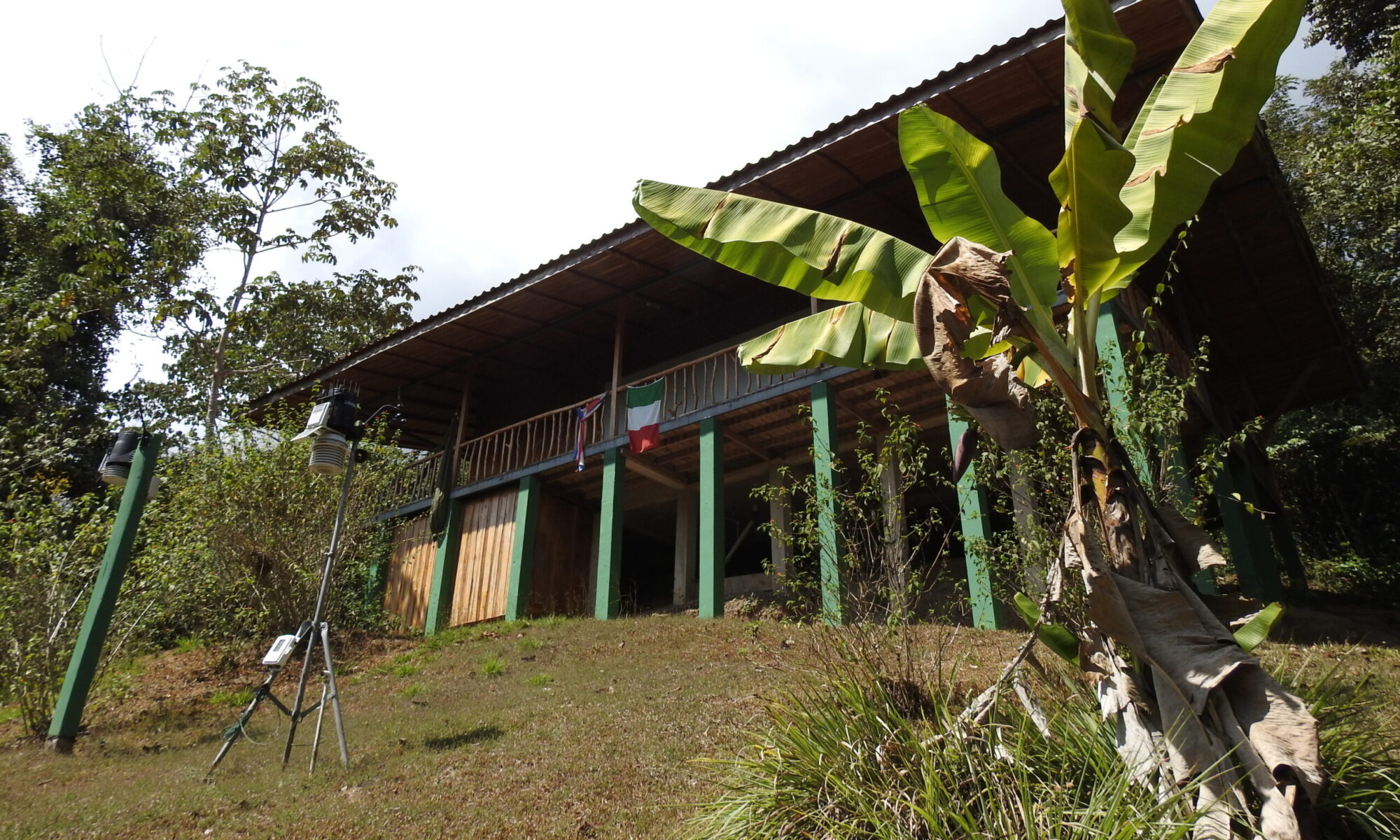
July 2025 ended with some noteworthy climate observations from the Karen Mogensen Reserve Meteorological Station, located on the Nicoya Peninsula, Costa Rica. The data, consistently transmitted and validated, confirmed the good operation of the equipment installed at the Italia–Costa Rica meteorological and biological station. This infrastructure remains a reference point for environmental and climate research, thanks to the collaboration between the Geophysical Observatory of DIEF UNIMORE, Foreste per Sempre, and the local staff of the Karen Mogensen Reserve.
Hot and relatively dry conditions, at least by tropical standards
Daily average temperatures were unusually high for the month of July, with a monthly mean of 26.1 °C, one of the highest values recorded since our historical series began in 2017. A slightly higher value (26.4 °C) was observed in 2024, although that year’s dataset was incomplete and less reliable.
The absolute maximum temperature reached 32.9 °C on July 16, while the lowest minimum was 19.2 °C, also on the same day. Mean relative humidity remained high at 90.0%, as expected during the wet season, but this was not accompanied by proportional rainfall.
The monthly total precipitation was 120.2 mm, a figure that, while not negligible, is relatively low for a month in the heart of the tropical rainy season. For comparison, 2019 recorded lower values, although significant data gaps were present that year.
Rainfall distribution was also highly uneven:
- 97.2 mm in the first ten days,
- only 3.0 mm in the second,
- and 20.0 mm in the third.
A case of relative drought, worth noting especially from an agroforestry and ecosystem conservation perspective.
Solar radiation and UV: high levels, protection required
Global solar radiation for the month reached 420.5 MJ/m², confirming the region’s strong solar irradiance even under partial cloud cover. The UV index peaked at a daily maximum dose (MED) of 14.8, with consistently high levels throughout the month and a monthly sum of 325.9 MED—a clear reminder of the need for sun protection for staff, visitors, and students.
A growing and strategic dataset for research
With July 2025 complete, the Karen Mogensen station continues to build a robust and valuable climate data series. The high-frequency (5-minute interval) and reliable dataset is increasingly sought after by Costa Rican universities, international research institutions, and local environmental agencies. Maintaining consistent observations is key to monitoring microclimatic trends and studying the impacts of climate change in tropical dry forest ecosystems.
Thanks to the collaboration between ASEPALECO, UNIMORE and Foreste per Sempre OdV, and the fieldwork carried out in January 2025 during the Field School, the Italia–Costa Rica meteorological and biological station is confirmed as a vital hub for scientific observation, environmental education, and international cooperation.