
An exceptional August 2026 at the Karen Mogensen Reserve: the hottest and driest in our records
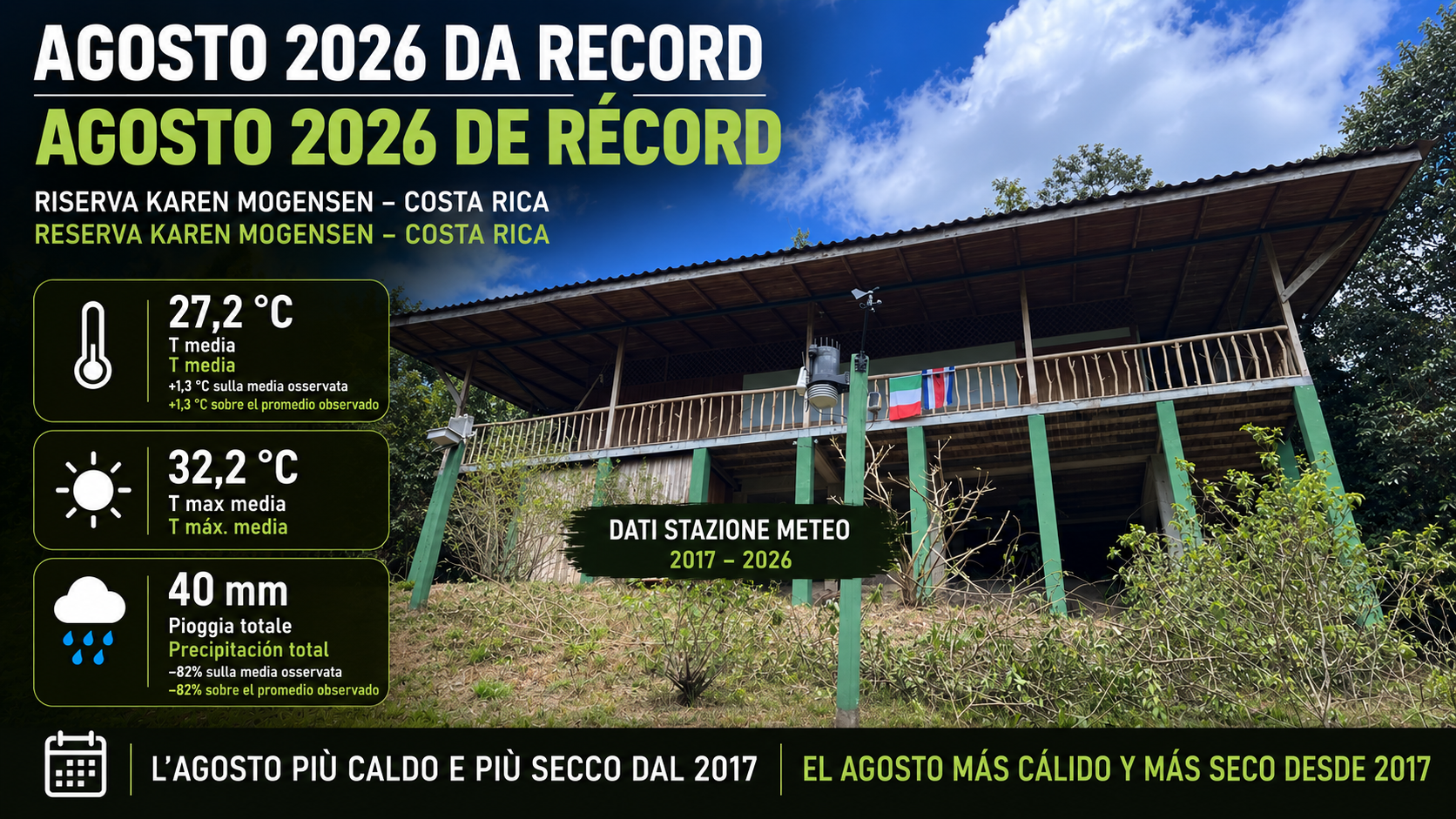
August 2026 has made history at the Italy–Costa Rica Biological Weather and Climate Station: it was the hottest and driest August among the complete months in our observational record, which began in 2017.
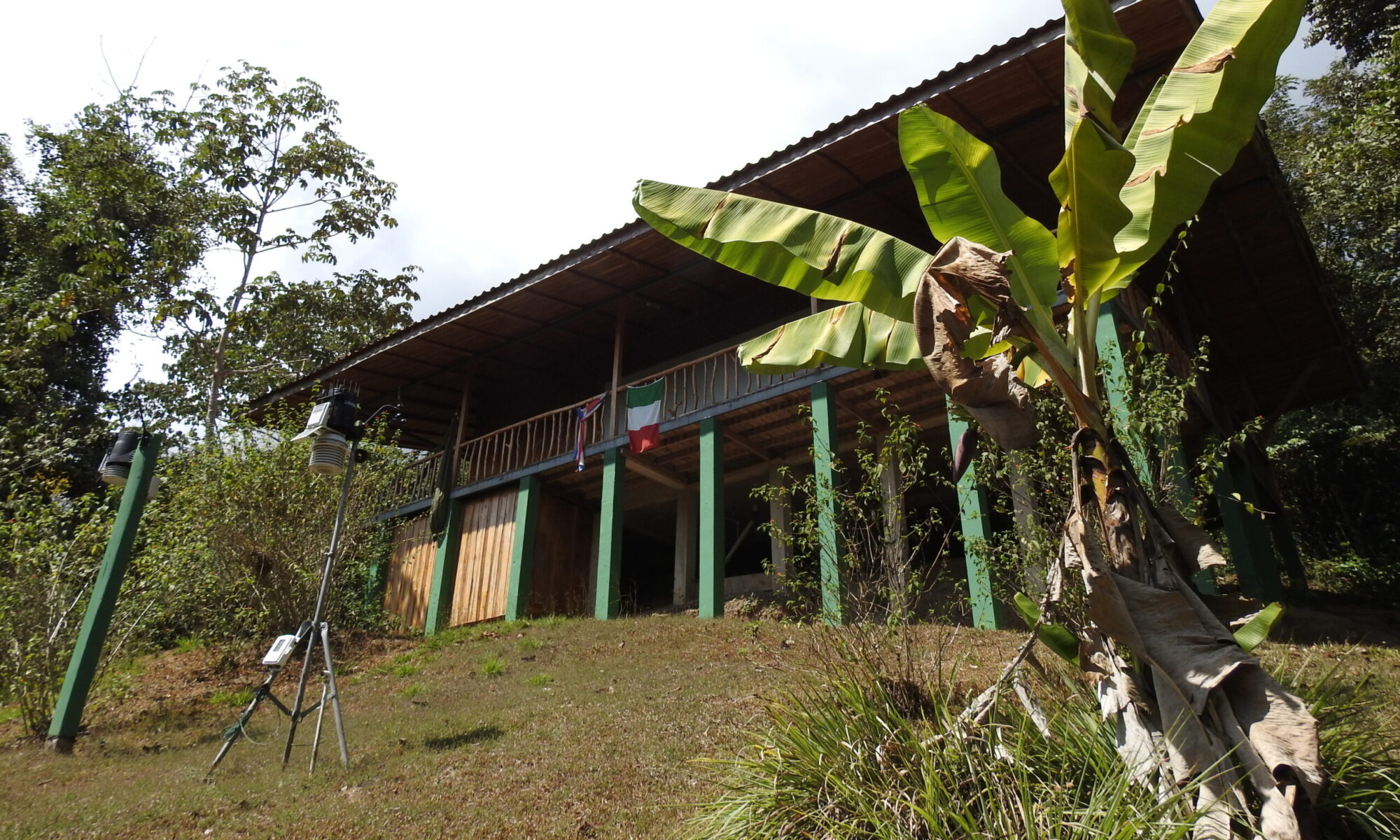
The weather station at the Karen Mogensen Reserve, on Costa Rica’s Pacific side, recorded a monthly mean temperature of 27.2°C and just 40 mm of rainfall.
This is a truly exceptional combination: persistently high temperatures and extremely low rainfall in the middle of the rainy season.
The key data for August 2026
The monthly mean temperature was 27.2°C, compared with an average of 25.9°C across our observations.
The anomaly was therefore approximately +1.3°C.
The previous hottest August in the series was 2024, with 26.2°C. August 2026 exceeded it by a remarkable 1.0°C, a very large margin for a monthly mean.
The main temperature data were:
- mean minimum temperature: 22.1°C;
- mean maximum temperature: 32.2°C;
- mean temperature: 27.2°C;
- absolute maximum: 35.1°C on 26 August;
- hottest day by daily mean temperature: 27 August, with 29.5°C.
The heat was also remarkably persistent:
- 26 out of 31 days reached or exceeded 30°C;
- 21 days reached at least 32°C;
- 7 days reached or exceeded 34°C;
- temperatures reached at least 35°C on 2 days.
The final part of the month was particularly hot. During the last eleven days, the mean temperature was 27.9°C, while the mean maximum temperature reached 33.5°C.
Just 40 millimetres of rainfall
The rainfall figures are even more striking.
Only 40 mm fell during the entire month, compared with an average of 226.5 mm across our observations.
The deficit was therefore 186.5 mm, or approximately 82% below average. In other words, August 2026 received just 18% of the average observed rainfall.
The daily distribution also highlights the exceptional lack of rain:
- 16 days recorded no rainfall at all;
- 23 days received no more than 0.2 mm;
- the event on 5 August alone produced 21.2 mm, more than half the monthly total;
- the three most significant rainfall events accounted for approximately 84% of the entire monthly total.
The month was therefore characterised not only by a very low rainfall total, but also by precipitation concentrated into only a few events, separated by long periods that were almost completely dry.
A record even more striking than it appears
The historical table shows a total of 120.8 mm in August 2019, but numerous interruptions affected data acquisition during that month. The 2019 rainfall total is therefore very likely underestimated and cannot be compared directly with a complete month.
If the rainfall comparison is limited to previous Augusts with complete data, their average rainfall was approximately 268 mm. Against this reference, the August 2026 deficit reaches approximately 85%.
An important achievement for our station
This year’s scientific result also gives us a special reason for satisfaction.
In February 2026, Luca Lombroso and Dario Sonetti carried out major maintenance work on the weather station at the Karen Mogensen Reserve.
Thanks to that work, all the data for August 2026 were acquired successfully: 31 complete days, without a single missing observation.
This achievement should not be taken for granted. The station is currently unattended and operates in a tropical environment where heat, humidity, heavy rainfall, vegetation and wildlife continually test the sensors, power supply and data transmission systems.
Having a complete and uninterrupted month of observations is therefore a genuine technical and scientific success. The quality of the observations depends not only on the instruments, but also on field maintenance and the constant care of the entire system.
A forthcoming feature on El Niño and preparedness
The exceptional heat and severe rainfall deficit are consistent with the types of effects associated with El Niño on the Pacific side of Central America.
These data remain highly important because heat and drought during the rainy season can increase stress on vegetation and pressure on water resources and ecosystems. We will therefore continue monitoring conditions at the Karen Mogensen Reserve.
In the coming days, we will publish an in-depth article about El Niño, its possible effects in Costa Rica and the measures that can help communities prepare for potentially hotter and drier periods, including water conservation, wildfire prevention, vegetation management and wildlife protection.